
How to Build a Fitness Routine You’ll Stick To
If creating and sticking to a healthy fitness routine were easy, everyone would have one! Physical health is very important for both our physical and mental wellbeing, helping to prevent our bodies from developing health complications, such as obesity and heart disease. However, some people are unable to stick to their fitness plans for whatever reason. That’s why having a routine that you stick to will be crucial.
Genetics make up a small percentage of it, mainly because they determine your body composition from birth, which means some individuals are naturally more efficient at burning and storing energy. However, it’s not just genetics that determine whether you find it easy or difficult to stick to an exercise routine. Another influence is your external environment, for example your working schedule.
The most important factor to be aware of is your psychology. This is because, even in circumstances where every factor is in favour of exercise, your mindset can be a stubborn hurdle that you’ll find hard to get over. In this article, we will explore how to build a fitness routine you’ll stick to, so you can feel your best.
Read: How to Rebuild Your Health and Fitness Routine After Moving Abroad
Add Variety Into Your Routine
One of the most common reasons why people struggle to stick to a fitness routine comes down to tedium – in other words, boredom. Although similarity and consistency are important when it comes to building a routine, if you’re following a routine that has no variety, it’s likely you’ll get fed up quickly. Variety and change encourage excitement, and they also make sure your routine doesn’t feel too predictable.
On top of this, variation is not only beneficial for our attitudes towards exercise, but also for our physical health too. When you partake in a range of different exercises, you work your body and muscles in lots of different ways, improving a mixture of different metabolic processes.
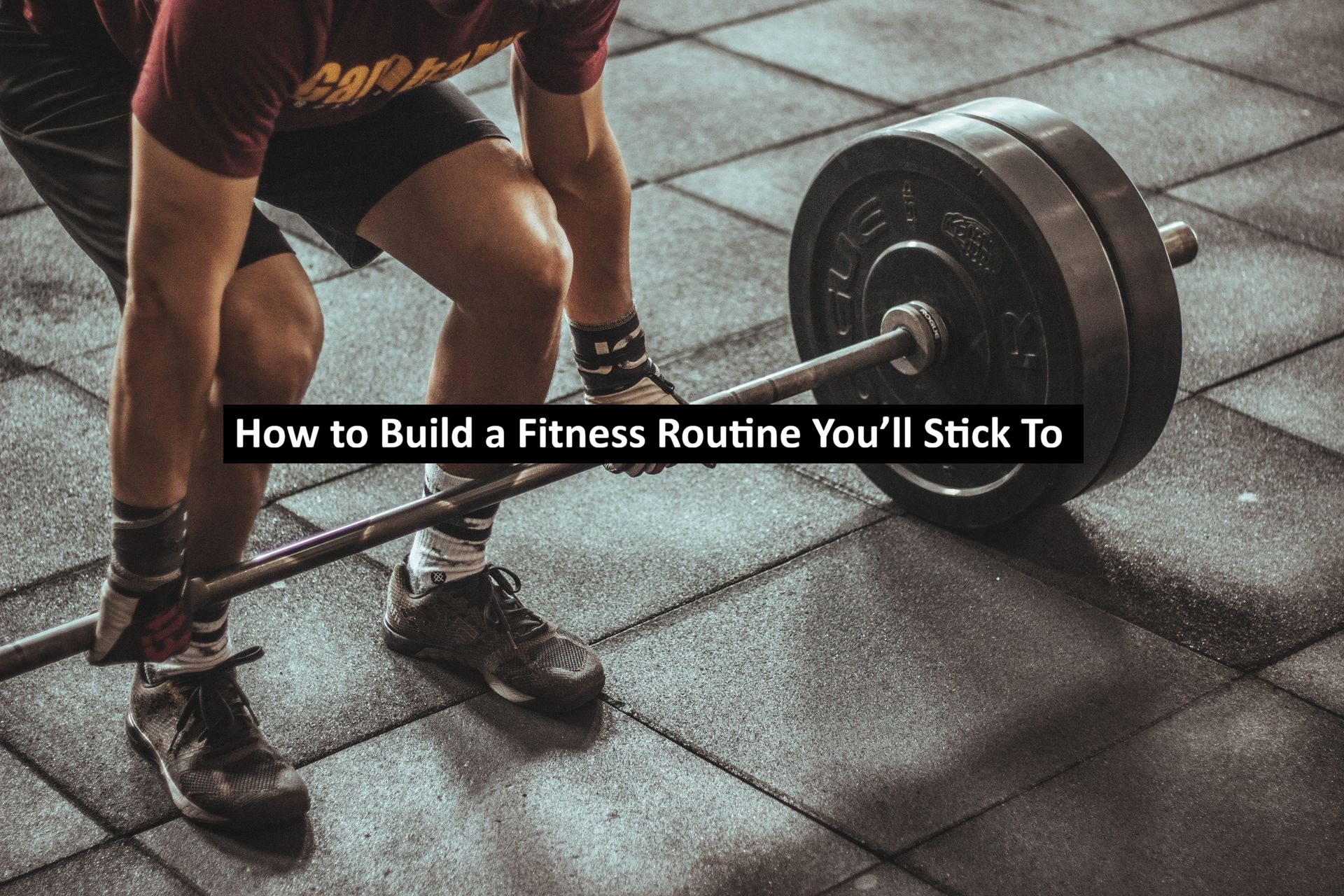
Lighting jogging is always a good addition to any fitness routine, as it’s not very strenuous and it can improve your aerobic energy system. Anyone can do this, as opposed to long-distance running or sprinting, which takes out more on your body. Weight training can also be beneficial for improving strength while getting your muscular endurance back to a desired level.
Fuel Your Body With The Right Food
Without food, exercise is pointless. You can’t expect to reach your fitness goals and stick to a routine if you’re not eating enough food – but more importantly, the right foods. Different forms of physical activity favour different types and quantities of food, but in general, it’s recommended to eat a balanced diet filled with protein, carbohydrates, healthy fats and fibre.
Most professional athletes will focus on eating meat to get more amino acids into their diet, which is essential for muscle growth and repair. This doesn’t mean that people following certain diets, such as vegetarianism or veganism, can’t reach their protein goals for muscle growth. Plant-based proteins can be found in beans and nuts, so you can get them into your diet very easily. In addition to choosing the right foods, it’s also important to eat at appropriate times relative to your exercise schedule.
So that you feel energised before working out, you should consume easy-to-digest carbohydrates like bananas and toast, and this should be ideally 1 to 3 hours before exercising. Following physical activity, choose a meal that’s high in carbohydrates and protein, and within 60 minutes of finishing exercising.
Some good examples of post-exercise meals include Greek yoghurt with berries, a fruit smoothie with protein powder, or turkey slices on whole grain bread. If you eat a large meal too close to exercising, you may experience stomach cramps or feel lethargic. Equally, if you leave it beyond 60 minutes to eat following exercise, you may slow your recovery by delaying the nutrients your body needs for growth and repair.
Tailor Exercise To Your Needs
Everyone’s exercise routine looks completely different—and it should! Exercise shouldn’t overhaul your everyday life; instead, it should be integrated into it so that you can continue enjoying your other activities without making unnecessary sacrifices. While there are physical exercise guidelines outlining the recommended activity levels for different age groups, any amount of movement you can fit in is certainly more beneficial than none at all.
This won’t work for everyone, as some people will not want to workout in the morning. If this option isn’t for you, adapting your routine is always an option. Some people enjoy preparing for the morning the night before, which can be done by packing your back with everything you need for the next day, including a hairbrush and lip gloss. Don’t sacrifice the parts of your routine that you can’t do without, so if you only enjoy a small amount of exercise that’s absolutely fine.